

What is Hate Speech Detection?
Hate speech detection aims to identify language that attacks, dehumanises, or incites hostility against protected groups (e.g. based on race, religion, gender, sexual orientation, disability) or individuals as members of those groups. It uses a combination of quantitative and qualitative methods, combining machine learning with human oversight. In practice, many systems operationalise broader “toxicity” taxonomies (hate, identity attacks, insults, threats, obscenity) to support moderation and research.
Models trained on “toxicity” often stand in for “hate speech,” but these constructs are not identical. Using toxicity as a proxy can misclassify benign counterspeech, historical quotation, or ingroup self-reference as “hate,” while under-reacting to subtle or coded bigotry.
What is the Underlying Methodology For Detecting Hate Speech?
Developing effective algorithms for hate speech detection begins with establishing a clear and comprehensive policy framework. This involves defining and differentiating between related but distinct categories such as hate speech, harassment, and profanity, and adopting a fine-grained taxonomy of labels that capture nuanced cases. These might include categories such as explicit hate, implicit or coded hate (where no overt slurs appear), reclaimed slurs, targeted harassment, threats, and genocidal or extermination rhetoric. Contextual rules are also essential to ensure that systems correctly interpret instances of quoted or reported speech, counterspeech, satire, and academic discussion, which may contain hate-related language without constituting hate speech themselves.
Once a policy and taxonomy are defined, the next step is data collection and curation. Training data typically comes from a mix of sources including user reports, platform samples, NGO datasets, academic corpora, and sometimes synthetic data designed to augment coverage of rare or sensitive cases. Each instance is labelled by trained annotators who follow detailed guidelines to ensure consistency and fairness. Multiple annotators often label the same samples, with disagreements resolved through adjudication. Maintaining diversity and balance across dialects, languages, regions, and both positive (hateful) and hard negative (benign but similar) examples is crucial for ensuring generalizable performance.
Algorithmic modelling generally begins with a hybrid approach that combines rule-based methods and machine learning. Rule-based filters—such as lexicons of slurs, hate symbols, or regular expressions for threat detection—offer transparency and speed, serving as a first line of quality control. These rule-based filters are complemented by classical machine learning models using features like n-grams, TF-IDF representations, sentiment cues, or syntactic dependencies, typically trained using algorithms such as logistic regression or support vector machines.
State-of-the-art systems increasingly employ deep learning approaches. Fine-tuned transformer models—such as BERT, RoBERTa, or DeBERTa, including multilingual variants—are used for text classification tasks and multi-task setups that jointly model hate speech, toxicity, harassment, and threats. Context-aware architectures integrate conversation history, user metadata, or multimodal inputs (such as images and text). Large language models (LLMs) also play a growing role, enabling few-shot or zero-shot detection for new policy areas; these models are often distilled into smaller, efficient versions for real-time deployment.
Given the linguistic and cultural diversity of online discourse, multilingual and cross-lingual strategies are key. Some systems train models separately per language, while others use multilingual fine-tuning or machine translation pipelines to extend coverage. Each approach entails trade-offs in latency, accuracy, and fairness, particularly when translation errors distort meaning.
To ensure safety, robustness, and operational reliability, modern hate speech detection systems typically adopt a layered ensemble architecture. They combine lexicon-based filters, machine learning classifiers, and heuristic rules, with thresholds calibrated for different languages and policies. Uncertain or borderline cases are routed to human moderators, and active learning is used to identify ambiguous or novel examples that can inform ongoing retraining and refinement.
Human-in-the-loop moderation remains a critical safeguard. Automated systems handle high-confidence cases directly, while medium-confidence outputs are reviewed by human moderators. Low-confidence content may be allowed but monitored for escalation. This workflow supports appeals processes, periodic audits, and quality assurance reviews that mitigate bias and prevent model drift over time.
Finally, evaluation and continuous monitoring ensure that the system remains fair, accurate, and adaptable. Metrics such as precision, recall, F1-score, ROC-AUC, and confusion matrices are used alongside cost-sensitive and harm-aligned evaluations that reflect moderation priorities. Robustness testing covers adversarial manipulation, coded language, dialectal variation, sarcasm, and reclaimed slurs. Fairness audits track subgroup performance, calibration, and group-wise error rates to detect bias. Crucially, the entire pipeline operates under a continual learning paradigm: as language evolves and new euphemisms or coded terms appear, models are regularly updated to maintain both technical efficacy and ethical integrity.
Realities
Content moderation systems for hate speech detection face a range of limitations and challenges that stem from the complexity and fluidity of human language and context. One of the most persistent difficulties lies in the ambiguity and context dependence of online communication. Sarcasm, reclaimed slurs, quotations, satire, and counterspeech can all appear similar to hate speech when stripped of context, leading to misclassification. Distinguishing between identity terms used descriptively and slurs used derogatorily requires nuanced linguistic and cultural understanding—something that automated systems still struggle to achieve.
Another major challenge is domain and language drift. As online communities evolve, new euphemisms, coded references, and linguistic innovations emerge, often designed to bypass moderation filters. Without continuous retraining and data updates, models quickly become outdated and less effective. Alongside this, bias and fairness remain critical concerns. Systems may over-flag certain dialects, such as African American English (AAE), while under-detecting hate speech in underrepresented languages or minority communities. Annotator bias, inconsistent labeling practices, and uneven data representation can further entrench systemic inequities in model behavior.
False positives and false negatives are another common source of error. Rules or thresholds that are too broad can flag benign content—such as educational materials or quoted speech—as hate, while subtle, implicit, or coded hate may evade detection entirely. Adversarial users exploit these weaknesses by manipulating language through spacing, misspellings, homoglyphs, emojis, or visual memes to disguise hateful intent and evade filters.
The problem is compounded by the rise of multimodal communication. Many moderation systems still rely primarily on text-based models, yet hate and harassment are often expressed through images, memes, videos, or even audio tone and emoji combinations. Failing to account for these non-textual signals limits detection accuracy and allows harmful content to persist in more visual or symbolic forms.
Legal and policy diversity adds another layer of complexity. The definition of “hate speech” varies across jurisdictions and platforms, leading to inconsistencies in moderation practices and requiring localized thresholds and model configurations to ensure compliance.
Finally, resource and governance constraints place practical limits on the scalability and transparency of moderation systems. High-accuracy, multilingual, and multimodal detection demands significant computational and human resources, which can be costly to sustain. Human review capacity is finite, creating bottlenecks for appeals and edge cases. Moreover, deep learning models, though powerful, are often opaque and difficult to interpret, making it challenging to provide clear, consistent, and appealable explanations for moderation decisions. This lack of explainability poses ongoing risks for accountability, user trust, and regulatory compliance in the governance of online content moderation systems.
Example using Detoxify to reveal key limitations in hate speech detection
Detoxify broadly represents a community consensus for state-of-the-art hate speech detection in both its processing system and its understanding of what constitutes toxic language. Anning (2022) applied Detoxify to two emblematic texts: Martin Luther King Jr.’s “I Have a Dream” (IHAD) as a non-hateful benchmark and Adolf Hitler’s Mein Kampf as a canonical hate text.
The method used spaCy segmentation to define specific sentences, then Detoxify scoring per sentence. It found the following:
Identity mention vs. identity attack confusion
IHAD was (counter-intuitively) scored with 17/82 sentences “toxic” and 13 “identity attacks.”
A key driver was the word “negro” used as ingroup self-reference in a historical context. Removing “negro” from sentences dramatically dropped toxicity scores (e.g. 0.67→0.07; 0.46→0.02).
This indicates reliance on word co-occurrence rather than intent or role (ingroup vs. outgroup usage). The model treats lexical items strongly suggestive of toxicity in training data as toxic regardless of benign intent.
Asymmetric sensitivity to identity terms
Modifying IHAD’s “little black boys and black girls … white boys and white girls,” removing “black” terms led to larger toxicity reductions than removing “white” terms in a parallel edit.
This points to skewed learned associations: the model has stronger toxicity priors around “black/negro”-related tokens than around “white,” likely mirroring frequency and context in training data. That is a fairness and calibration concern.
Under-detection of explicit or genocidal content in Mein Kampf
Despite its content, Mein Kampf had surprisingly low “severe toxicity” scores (e.g. top sentence 0.09, few above 0.01).
Sentences with antisemitic tropes (economic domination conspiracy, dehumanising metaphors like “parasite”) received middling or low scores (e.g., 0.27, 0.22), even lower than some IHAD sentences.
Combining two antisemitic sentences into a longer one reduced the toxicity score substantially (e.g. 0.22→0.04), suggesting length/dilution effects and sensitivity to surface features rather than semantic gravity.
Pronoun and referent ambiguity
The most toxic Mein Kampf sentence’s interpretation required resolving the pronoun reference (“his”) to a target group. The model does not resolve coreference or ideological framing, so it misses the target and the nature of the attack.
Over-reliance on co-occurrence and keyword priors
Developers acknowledged that insults/profanity spike toxicity “regardless of intent or tone.” The experiment shows that identity-laden words can similarly spike scores, undermining explanatory dialogue use-cases where context and intent matter.
Consequences for explanatory dialogues
For discussions that analyse or quote hate speech (education, research, moderation rationale), models can mislabel counterspeech or historical references as toxic.
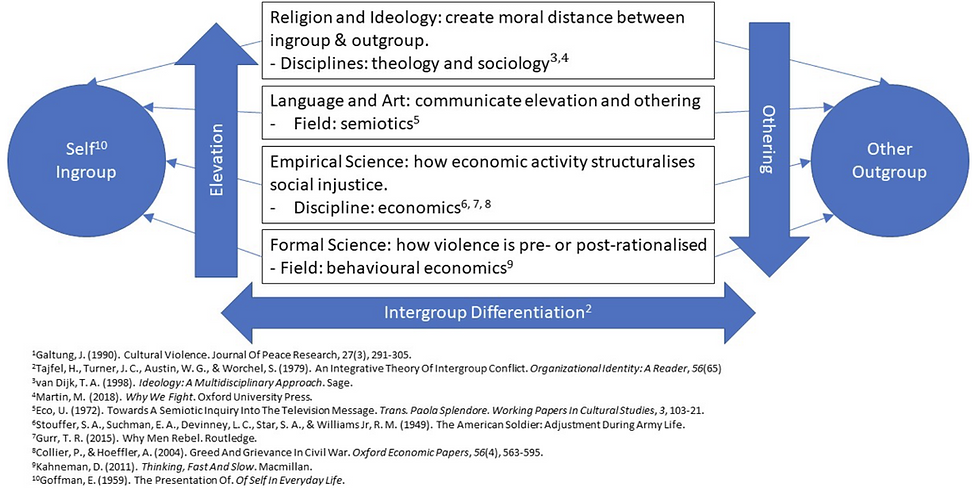
Conversely, subtle ideological elevation/othering or coded antisemitism can be under-scored, failing to surface key harms.
Conclusion
Hate speech detection is not fit for purpose. Hate speech has no single definition socially or legally, making detection based on ‘hate speech’ complex from the outset. Many methods confuse toxicity with hate speech, use systems that treat text as data rather than patterns (resulting in an overdependence on specific words determined as toxic) and have opaque methodologies, making decisions based on their systems ethically dubious. Without fine-tuning to task, domain, and context, transformer toxicity detectors can invert intuitive judgments, especially on historically charged terms and subtle extremist rhetoric.
Comments